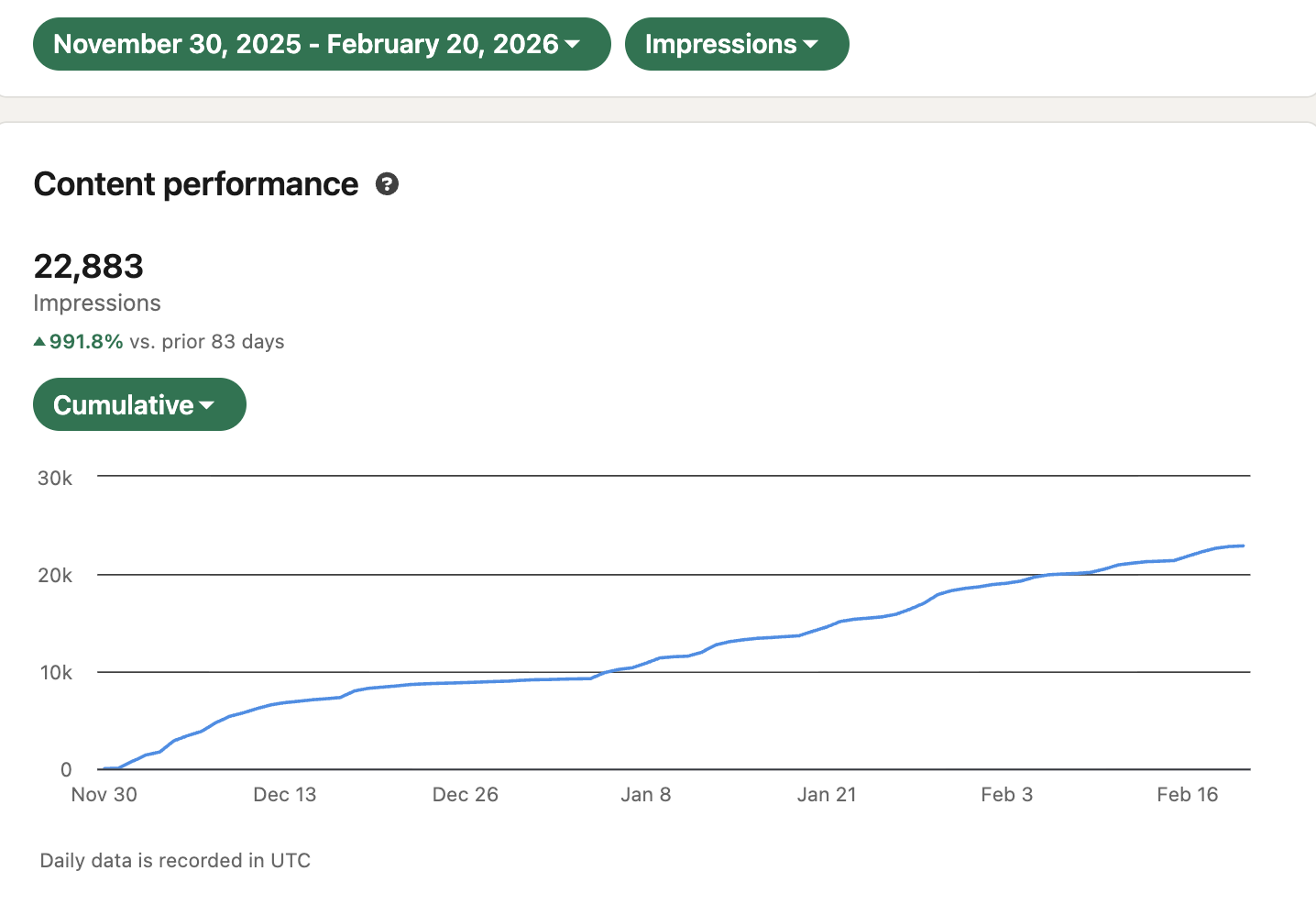
In 83 days, we almost 10x’d our LinkedIn impressions. We reached 7,200 unique members, up 411% over the previous 90 days and our top post drove more than 4,000 impressions. We didn’t hire a content team. We didn’t spend a dollar on content. We built one rule and a system. Here’s how it works.
We were idea rich and time poor
Our team is split between sales and engineering. Nobody owns content. For most of last year, our strategy did not have much rigor behind it. I’d write something vapid for LinkedIn engagement, get 300 impressions, and then try again 2 weeks later.
We averaged about 2,000 impressions a month, but it wasn’t meaningful. The issue wasn’t that we lacked ideas, we just lacked the time to turn ideas into finished posts, graphics, and videos.
The calendar problem
You’ve probably seen many content calendar templates. Monday is a blog post, Wednesday is a carousel, Friday is a short video. It’s color-coded and looks great, but it doesn’t keep you on task.
My Google Drive is riddled with content calendars I built and never used. Not because content calendars don’t work, but because one person can’t produce five formats across three channels every week. A content calendar is a plan. Plans don’t make content, production systems do.
The bottleneck for small teams isn’t knowing what to post. It’s making the thing.
One Rule
We stopped trying to be disciplined about content and built a system instead. The rule: everything we post gets made with Cosmos, our own platform.
This forced the issue. We couldn’t fall back on “I’ll write something later.” The system had to produce reviewable content on a schedule, or the experiment failed.
It didn’t fail. We started posting 2-3 times a week. Not because we suddenly found more hours, but because the system handled production and we just reviewed the output.
No single post went truly viral. We didn’t “study” the algorithm. We just stayed consistent, and consistency is what platforms actually reward.
How We Built It
Four steps. Adapt these to whatever tools you use.
1. Brand context first. We documented our voice, visual style, audience, and competitors before automating anything. AI without brand context produces generic content that sounds like everyone else. We spent a few hours on this upfront and cut weeks of “that doesn’t sound like us” edits.
2. Pick a realistic cadence. We committed to 2-3 visual pieces per week. Start smaller than you think you should. A cadence you actually maintain is better than an ambitious one you never execute.
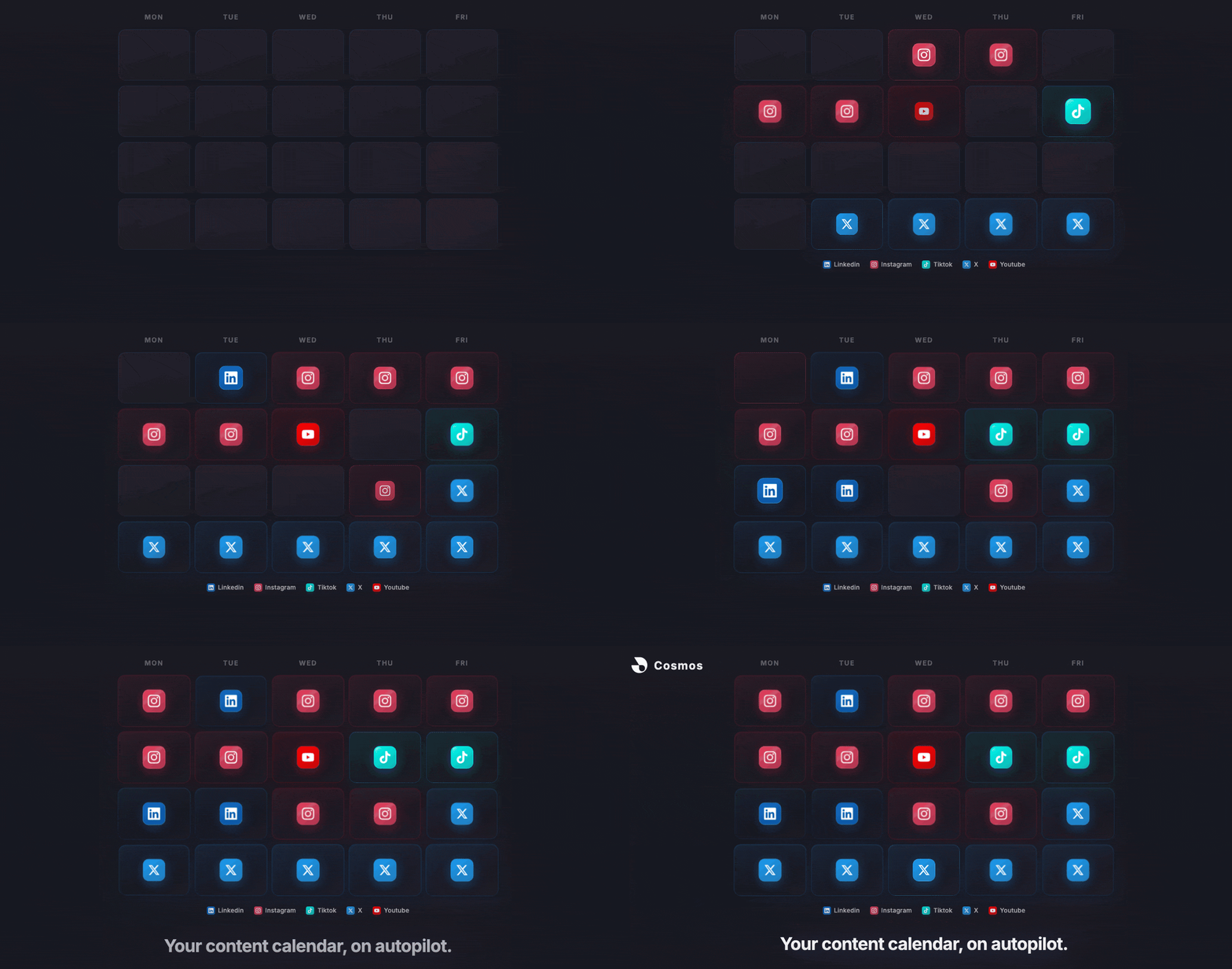
3. Automate generation, not just scheduling. This is where most setups fall short. Scheduling tools post content. They don’t make it. We built recurring automations that generate text, images, and video on a cron schedule, pulling from our brand profile every time. The system drops finished content into a review library and we take it from there. Even if the content needs to be heavily edited, you’ve already gotten the ball rolling by making it.
4. Review, don’t create. We spend about 15 minutes reviewing each batch. We pick the best pieces, tweak a headline, cut anything that misses. We became editors, not assembly lines. We stopped spending 90% of our time producing content and put that time back into everything else.
What I’d Actually Tell a Small Team
If you just need scheduling, use Buffer. It’s simple and it works. You don’t need anything fancier.
If you need AI text drafts on autopilot, Jasper and Copy.ai are solid. Both handle blog drafts, ad copy, and social posts well.
If you need text, image, and video from one system with brand context on a recurring schedule, that’s the specific gap we built Cosmos to fill. Most tools handle one format. Your audience lives across platforms that need all three.
If you want to DIY it, you can wire together Zapier, ChatGPT, and a video tool. It holds up for text. Add visuals and video and it gets messy fast.